
From moreki to umqombothi: Can Cadbury’s new chocolate wrappers influence culture?
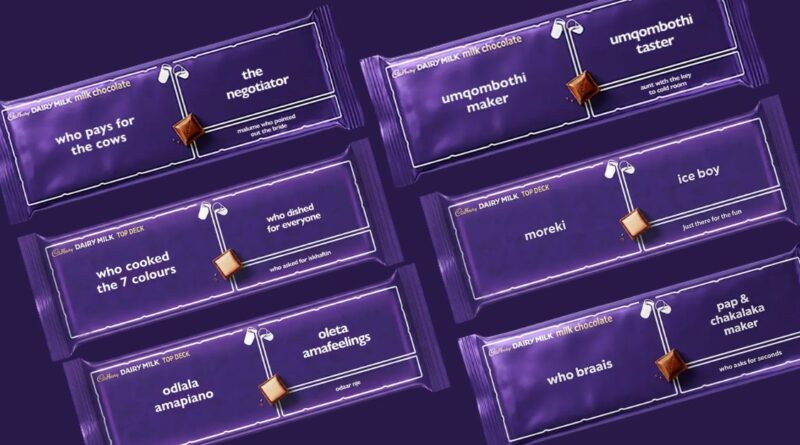
Every South African family gathering has its characters. There is the person who does most of the cooking, the one who keeps everyone entertained and, if your family is blessed, you may also have a moreki and a rich auntie.
Then comes the gathering after the gathering. The food has been eaten, the dishes may or may not have been washed and everyone has returned home. Now the real business begins: the post-family-gathering gossip.
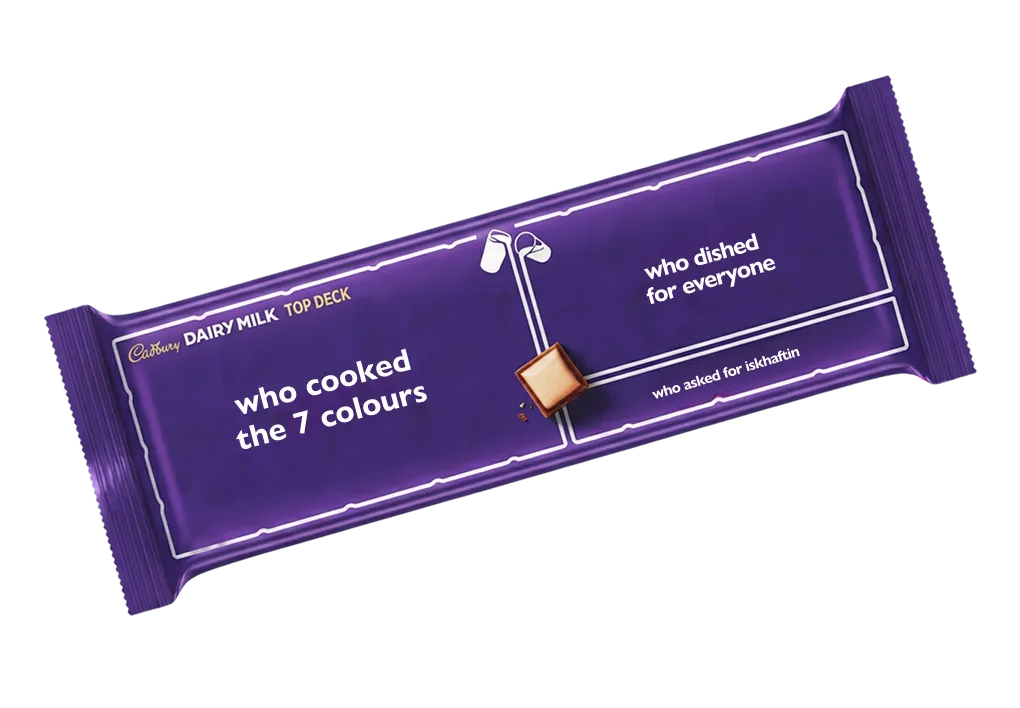
Who bought the meat? Who brought nothing? Who spent the afternoon in the kitchen? Who disappeared when it was time to clean up? And who arrived just as the food was being served, ate their fill and vanished before anyone could ask for a helping hand?
Cadbury Dairy Milk’s limited-edition Made To Share wrappers appear to have taken note. Featuring 16 scenarios inspired by everyday South African life, the wrappers draw on familiar social dynamics, from braai gatherings and family responsibilities to the making of umqombothi, traditional African beer.
The question is whether these wrappers can do more than remind us of the characters in our families. Could they influence how we think about sharing, contribution and appreciation?
Unwritten cultural rules
Sharing may be a virtue, but in many families it comes with a set of unwritten rules. Who helped prepare the food? Who brought something along? And who only materialises when everything is ready?
Cadbury’s campaign puts it bluntly: “You know who pulls their weight. And you know who just… pulls up. Let the slab decide who’s earned their share! It’s generosity, served with a side of truth.”
There is humour in that observation because most of us can name someone who fits the description. But beneath the joke is a familiar social expectation. In many African communities, sharing is not simply about making sure everyone gets a piece. It is also about contribution, acts of service, generosity and the relationships that bind people together.
Of course, contribution does not always come in the form of cash or groceries. Some people cook, others clean up afterwards and a few keep the children occupied. There are also those who lend a hand without being asked, check that everyone has eaten or make sure an elderly relative gets home safely.
Yet when the family gathers to discuss the day’s events, how often do these people receive the same attention as the relative who arrived late or the one who did not contribute?
Our post-gathering gossip is not going anywhere. It is part of how families make sense of their relationships, air their grievances and occasionally settle scores. But what if we also used those conversations to give people their flowers?
What if the aunt who cooked for everyone, the cousin who bought the groceries or the uncle who stayed behind to wash the dishes received a little recognition? We are often quick to point out who did not pull their weight. Perhaps we could become just as generous in acknowledging those who did.
Our favourite wrappers with a cultural connection
Some of the wrappers hit closer to home than others. Here are our favourite designs with a cultural connection, and the familiar family characters and traditions they bring to mind.
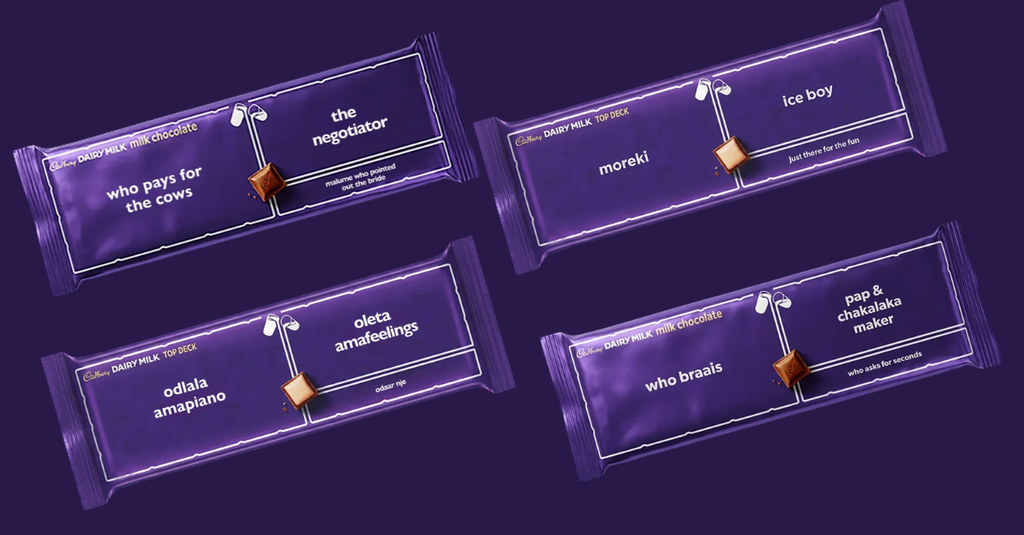
Cadbury had turned everyday moments into something people can recognise, laugh about and debate.
A South African braai is more about the people who prepare the food, the conversations around the fire and the negotiations over who is bringing what than the actual meat.
More languages, more of Mzansi
A chocolate wrapper cannot change family culture on its own. But familiar cultural references can open conversations, particularly when they make people laugh at themselves before pointing fingers at someone else.
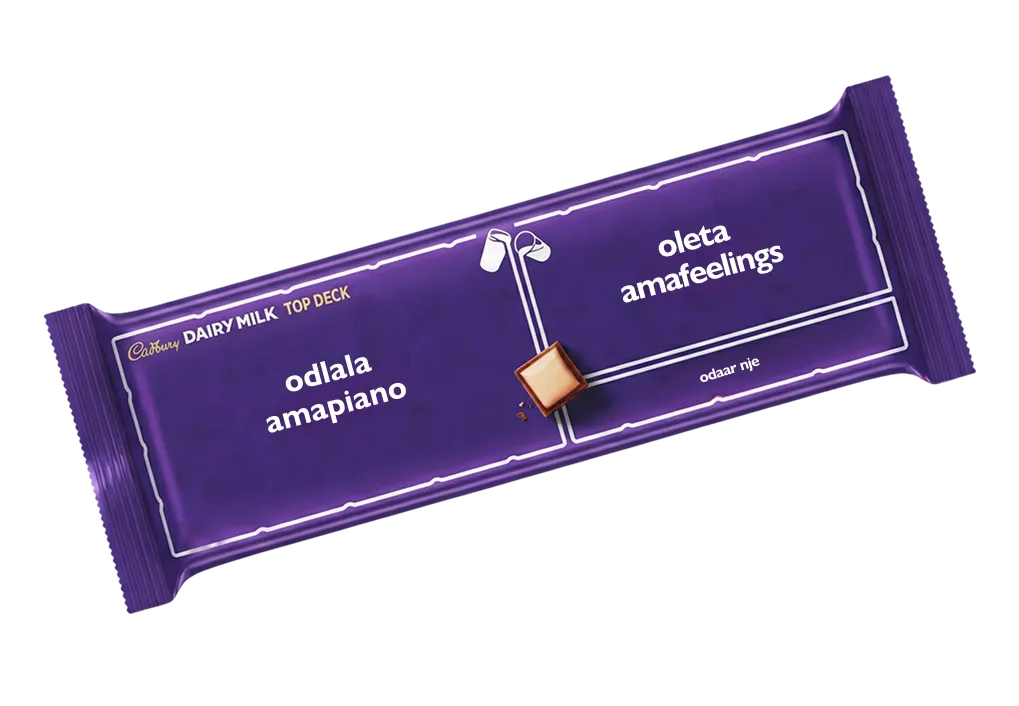
The brand describes itself as “a well-loved brand with a heritage of doing good in the world”, and the world, especially South Africa, is diverse in nature.
There is also room to go further. Cadbury has used isiZulu and English in its campaign, but South Africa has 12 official languages, alongside the many ways people mix languages in everyday conversation. Perhaps consider bringing more voices into the picture, voices that reflect more South Africans.
Take a page from Coca-Cola, which had its Share a Coke campaigns over the years. These featured personal names on bottles and cans, including names from different cultural and language backgrounds in South Africa.
And as for the moreki…who seems to remain a ‘moreki in every part of Mzansi, perhaps you could buy him…or her a chocolate or beer next time.
Also, at some point in the juicy gossip, maybe suggest something nice for those who meet the family’s very high standard… You know, the cooks, dishwashers, and those who simply made time to come through. Call them party packs if you like.