
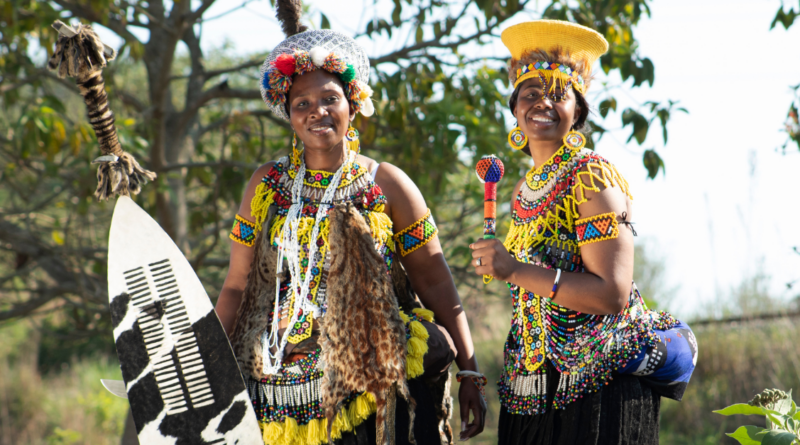
Why do we treat traditional clothes like Heritage Day costumes?
Every September, something rather curious happens in South Africa. It almost feels like Halloween, only our costumes are “cultural”.
People who spend most of the year in jeans, sneakers and whatever happens to be trending suddenly rediscover the wardrobes of their ancestors. Out come the beads, the blankets, the skins and all the beautiful materials that remind us of how we once lived.
For a day, a week, sometimes an entire month, we dress “African”.
And then October arrives, and it is back to normal.
When did our cultural clothes become costumes?
Have we turned our clothes into costumes? Not costumes in the sense that they are meaningless. Far from it. Clothing carries history, identity, status, belonging and memory. But there is something rather strange about treating the clothes of our own cultures as special occasion dress, almost like Americans pulling out a costume for Halloween.
Except Halloween is meant to be a costume. Our heritage isn’t.
Perhaps we have accidentally created a version of Heritage Day where we dress up as our culture, take the obligatory photographs, post “Proudly African ” and then hang the outfit back in the cupboard until September comes around again, unless of course, if we happen to attend a wedding which we often also theme as a ‘traditional wedding’ instead of simply… a wedding.
Our culture belongs in the everyday
Imagine wearing the beadwork to work, the doek to the supermarket or the shirt, skirt, blanket or jewellery because it is Tuesday, not because a calendar told us it was time to celebrate ourselves. Imagine cultural clothing becoming as ordinary as a suit, a tracksuit or a pair of jeans.
Our designers have already been playing their part, creating beautiful cultural-inspired clothing that is made for everyday wear, not just weddings, funerals, ceremonies and Heritage Day photographs. The clothes are there, and increasingly, so are the options. Perhaps the next step is for the rest of us to make wearing them feel just as normal.
But there is an even bigger question we should be asking.
What if Heritage Day became about more than what we wear?
What if, instead of spending September debating whose outfit is more authentic, we used the month to drive something tangible? We could have a national campaign to preserve indigenous languages, a serious push to teach children local history, a national archive of oral histories before our grandparents’ stories disappear, or a drive to support the craftspeople and textile makers who keep these traditions alive.
Perhaps Heritage Day could become about more than the clothes we wear.
A living culture
So yes, wear the clothes and take the pictures and eat “traditional” food, which, for our health’s sake, should just be food.
But perhaps next Heritage Day, let’s ask ourselves a slightly more uncomfortable question: If we took the clothes off, what exactly would we still be doing to keep our culture alive?
https://addlinks.pro/GmzFJ