
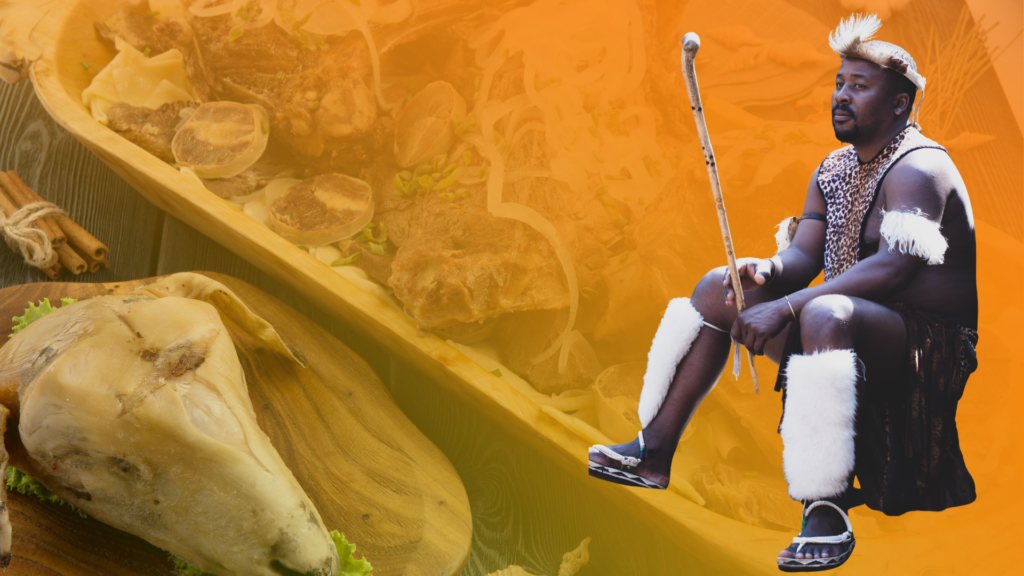
The head of a slaughtered sheep, goat or cow is often one of the first parts people ask about at a traditional gathering.
Who gets to eat it?
In many Zulu families in South Africa, tradition says it belongs to the men. For outsiders, that can seem unusual or even unfair through a modern lens. Within its cultural context, though, the practice carried a different meaning.
As South Africa marks Men’s Mental Health Month this June, In My Culture asks what today’s conversations around men’s wellbeing can learn from cultural traditions that showed appreciation through food.
Historically, during ceremonies and family gatherings, men were often responsible for slaughtering cattle and carving the meat for everyone present. While this is no longer exclusively a man’s role and women and professional butchers regularly perform the same work today, the custom developed in a time when those responsibilities largely fell to men.
The reward was inhloko, the head.
In a conversation with In My Culture, Gogo Thandi Sibanyoni-Skhosana says that the belief that women do not eat a slaughtered animal’s head, popularly known as skopo across South Africa, is more about the community’s relationship with men than about the exclusion of women.
“It’s our culture to show our appreciation to the helpful men by giving them that part of the meat.”
“It was to thank them,” she says.
WATCH: Why ‘skopo’ is reserved for men
The gesture recognised the labour of their hands and the role they played during ceremonies. It was one way a community expressed gratitude after the work had been done.
That message is particularly relevant during Men’s Mental Health Month.
Much of the conversation around men’s wellbeing focuses on encouraging vulnerability and seeking support. Less attention is paid to something equally human: feeling recognised. In many traditional communities, appreciation was often expressed through actions rather than words. Giving the cow’s head was one such gesture.
Modern South Africa looks different.
Women slaughter livestock, prepare meat and take on responsibilities that were once largely reserved for men. Commercial butchers have also replaced many of the community roles once carried out by family members. As a result, many women now enjoy inhloko too and anyone who has tasted it will know it is among the most tender and flavourful parts of the animal.
The evolution of the tradition does not erase its history. Instead, it shows how culture adapts while holding on to the stories behind its customs.
Skopo and the nutritional benefits for men
Interestingly, nutritional data from resources such as MyFoodData suggests that cow head is exceptionally nutrient-dense. Cooked beef head contains a substantial amount of protein and fat, with approximately 41% of its calories coming from protein and 59% from fat, although this can vary depending on the cut and preparation method. Such a calorie-rich, protein-rich profile would have been well-suited to physically demanding lifestyles that included manual labour and livestock herding.
The meat is also naturally rich in zinc. Every 100 grams of cooked beef head contains around 5.9 mg of highly bioavailable zinc. Zinc is an essential mineral for both men and women, but it also plays an important role in male reproductive health, including testosterone production and normal hormonal function.
In addition, the cheek muscles, skin and connective tissues contain natural collagen and collagen-derived proteins, contributing valuable amino acids to the diet. While eating collagen does not directly repair joints or ligaments, these proteins can support overall nutrition and connective tissue maintenance as part of a balanced diet.
Women of reproductive age often have higher iron requirements because of menstrual blood loss, making iron-rich foods such as beef liver particularly valuable. Although the tradition of reserving inhloko for men is rooted in cultural and social practices rather than documented nutritional science, the meat’s rich supply of protein, fat and zinc would have complemented the dietary needs of physically active adults.
‘Inyama yenhloko imnandi yaz?’
Today, that acknowledgement can take many forms.
Sometimes it is a shared meal. Sometimes it is a conversation. Sometimes it is simply saying thank you.
And in many Zulu homes, the story of inhloko still reminds people that appreciation has always had a place at the table, even as women increasingly enjoy a delicacy that was once reserved for others.